
- Home
- Customized Refrigeration Rack Systems
Customised Refrigeration Rack Systems
One engineered plant for many cold rooms, cabinets and process loads.
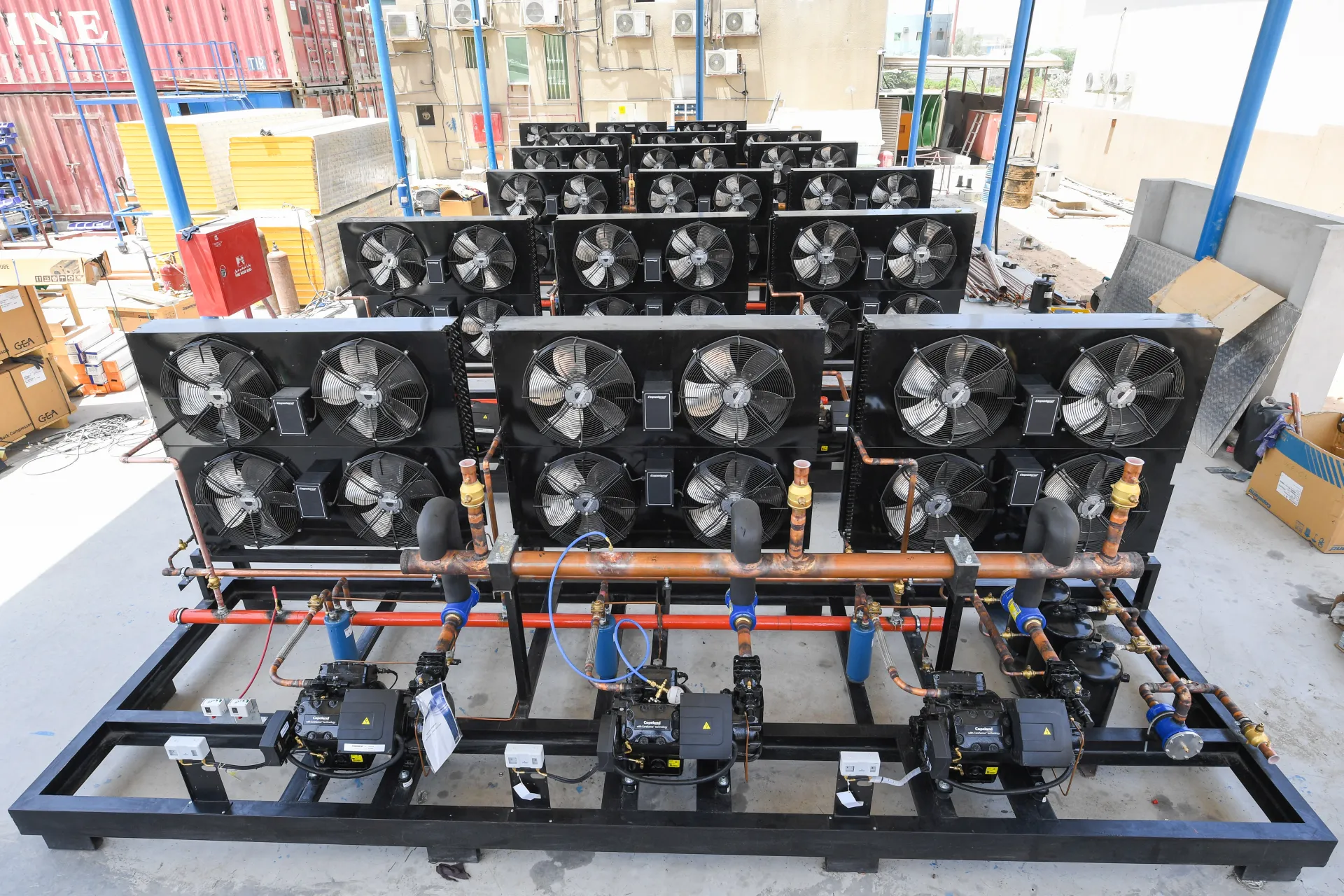
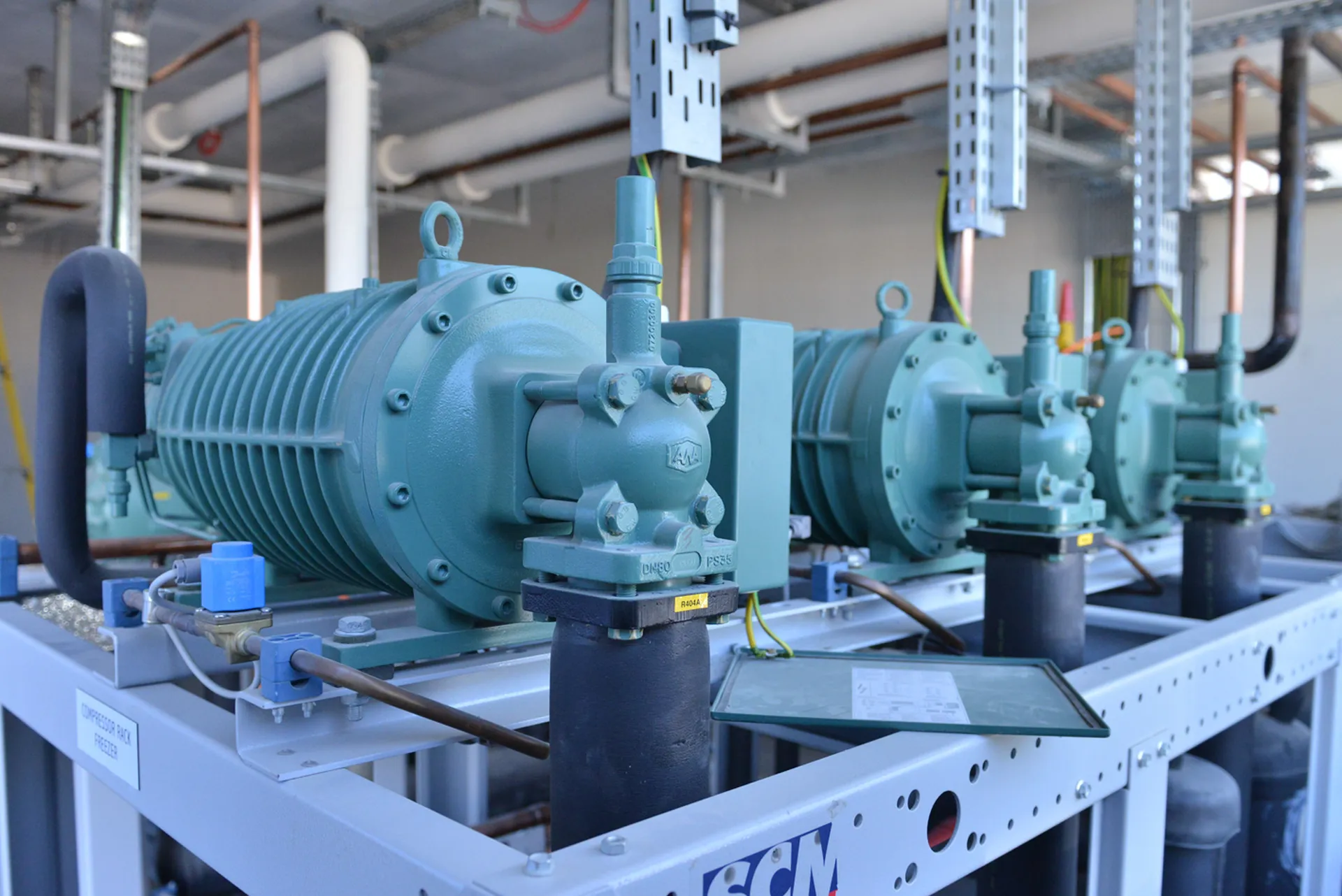
A refrigeration rack system, also called a power pack, groups several compressors on a common frame to serve multiple cooling loads from one plant room. Instead of a separate condensing unit for every room, the compressors share the total load and stage up or down as demand changes. LEOTECH designs and builds rack systems for commercial and industrial sites, each configured to the loads it will serve.
When does a centralised rack make sense?
A rack suits sites with many cooling points: food plants, distribution centres, cold stores, supermarkets and large kitchens. For one or two rooms, individual units are often simpler.
| Factor | Centralised rack | Individual units |
|---|---|---|
| Initial investment | Generally higher | Generally lower |
| Running cost | Can be lower, as compressors share the load; depends on design and use | Varies with the number and condition of units |
| Maintenance | Compressors serviced in one plant room; evaporators, valves, controls and piping across the site still need regular maintenance | Each unit maintained at its own location |
| Standby capacity | Possible, where spare capacity is designed in | Each room depends on its own unit |
| Monitoring | One point for the plant and connected loads | A separate controller per room unless networked |
A central plant also means more of the site depends on one system, so plant room access, power supply and maintenance planning need attention. The right choice depends on the number of loads, how they vary through the day and the site layout. We assess this before recommending either approach.
How compressor control works
The rack controller starts and stops compressors in stages to match the load. This helps keep suction and discharge pressures stable, shares running hours between compressors and reduces frequent on–off cycling, which adds wear. Racks can serve medium-temperature (chilled) loads, low-temperature (frozen) loads, or both on one site.
What does redundancy mean for a rack?
Compressor redundancy provides spare capacity that may allow the plant to keep serving the load if one compressor stops. It is a design choice, not an automatic feature. It depends on how many compressors are installed, how much spare capacity is sized into the rack and how shared components are arranged. If continuity is critical for your stock, tell us at the design stage so standby capacity can be specified.
Monitoring and control
Rack systems can be supplied with central monitoring using PLC, HMI and SCADA-based controls. These log temperature, pressure, humidity and power data, send alarm messages to registered mobile phones when values move outside configured limits, and let authorised users view and adjust settings remotely. Connection to a building management system (BMS) can be included where the project requires it.
Monitoring depends on correctly placed sensors, appropriate alarm limits, working power and communication links, and someone assigned to respond. It supports routine maintenance; it does not replace it.
What we consider when designing a rack
chillers, freezers, process rooms, display cabinets
Our scope
Why LEOTECH
LEOTECH builds its own rack systems and can deliver the cold rooms, doors and controls connected to them. One team is responsible for how the refrigeration system performs as a whole.
Plan your central plant
Share a list of the rooms and cabinets you need to serve, with their temperatures. We will advise on rack configuration and standby options.
Frequently asked questions
Is a rack system more energy-efficient than individual units?
It can be, because compressors share the load and can run closer to their efficient range. Actual results depend on the site, loads and operating pattern, so we assess them per project.
Can one rack serve both chillers and freezers?
Yes, with suitable design. Mixed medium- and low-temperature loads can be served from one plant, depending on the configuration chosen.
Can more rooms be added later?
Often, if spare capacity and connection points are planned at the design stage. Share likely expansion early.
What happens if one compressor fails?
If the fault is isolated to one compressor and the controls permit continued operation, the others may keep running. Whether they can carry the full load depends on the standby capacity designed in. Faults in shared parts, such as the controller, power supply, condenser or refrigerant circuit, can affect the whole rack, which is why protective controls, alarms and regular maintenance matter.