
- Home
- Blast Freezers & Chillers
Blast Freezers and Blast Chillers
Rapid, even cooling designed around your product, load and cycle time.
A blast chiller or blast freezer brings product temperature down far faster than a storage cold room, using high-velocity cold air across the whole load. The speed of that pull-down affects texture, moisture retention and appearance, especially for delicate products such as fish. LEOTECH designs and installs blast systems for food processors, central kitchens and caterers, sized for the product you handle and the time you have.
What is the difference between blast chilling and blast freezing?
Both processes remove heat quickly. The difference is the end point.
| Comparison | Blast chilling | Blast freezing |
|---|---|---|
| End point | Product core is cooled to its required chilled temperature, without freezing | Product is frozen through to the core and brought to its required frozen temperature |
| Typical use | Cooked food, ready meals and bakery items moving to chilled storage | Meat, poultry, seafood and prepared food moving to frozen storage |
| What speed helps with | Shortening the time cooked food spends warm after cooking | Protecting texture and moisture by passing quickly through ice-crystal formation |
| What follows | Transfer to a chiller room | Transfer to a freezer room |
Target temperatures and cooling times are set by the product specification and your food-safety plan. We design the system to meet the figures you need to achieve.
Blast rooms are process equipment, not long-term storage. Once product reaches its target temperature, it moves to a walk-in chiller or freezer.
Why sizing matters
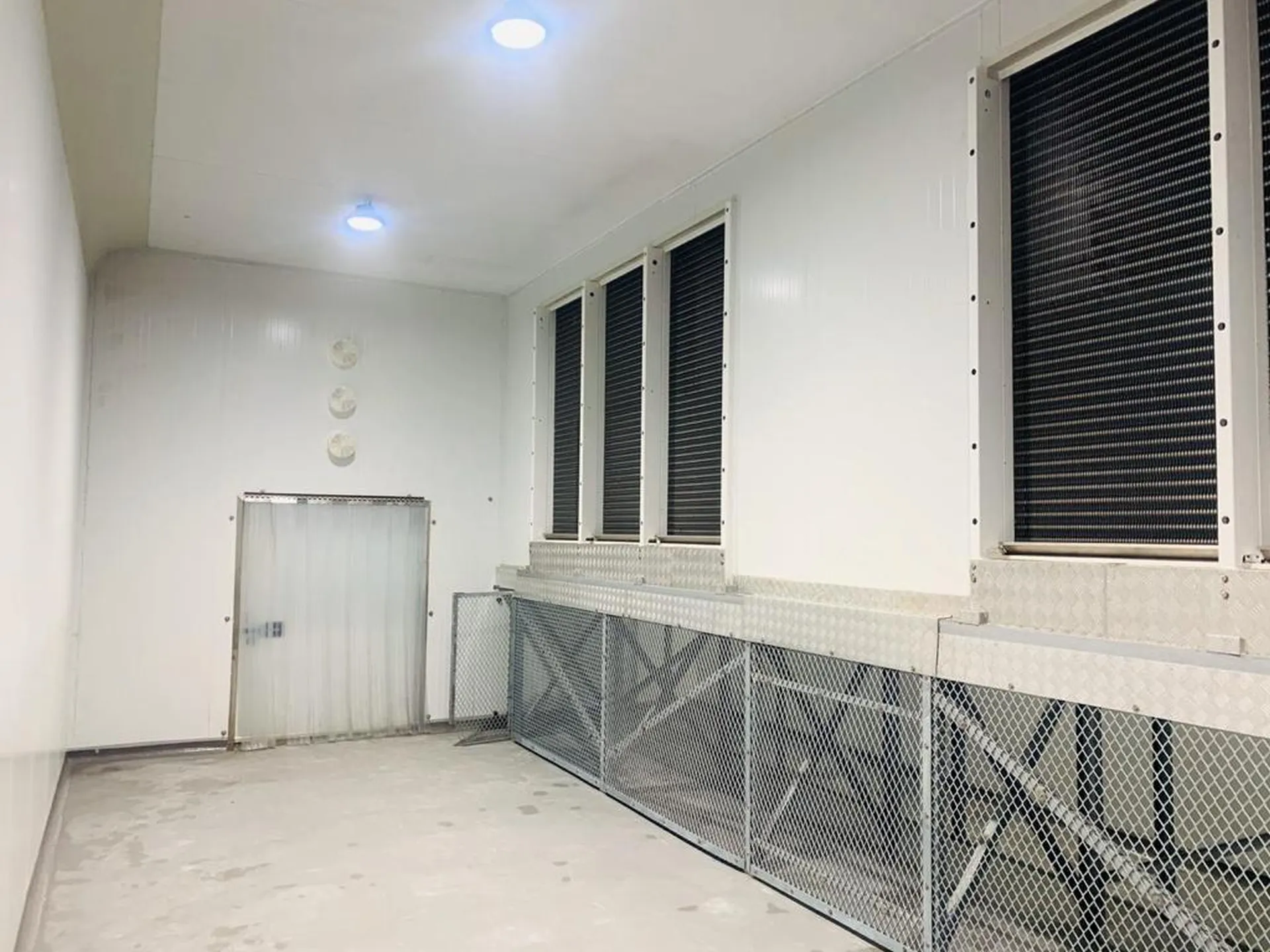
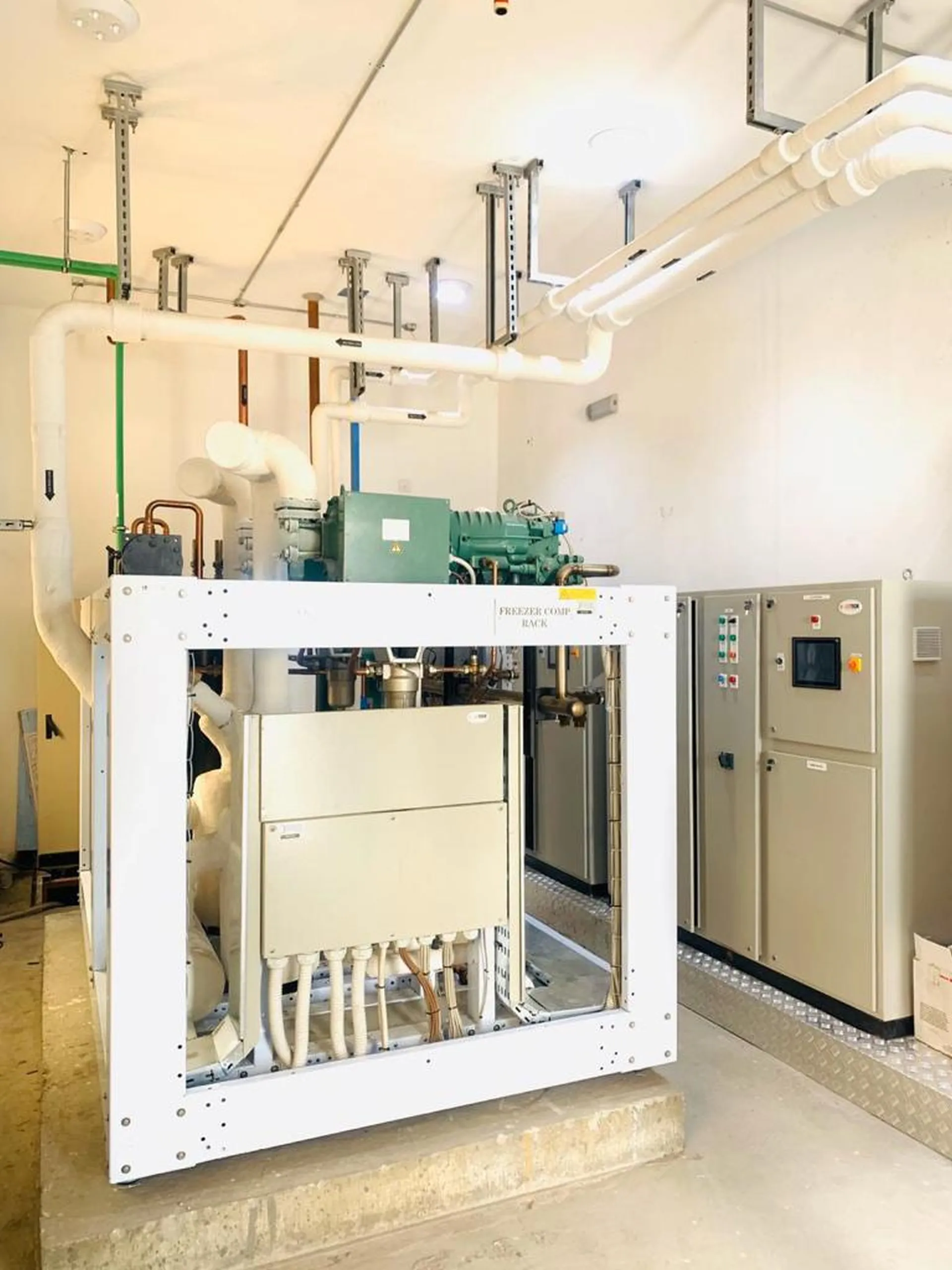
A blast system performs as intended when the room, evaporators and refrigeration plant are matched to each other and to the load. Loading more product, or warmer product, than the design allows can raise room air temperature and lengthen cooling or freezing times. It may place extra demand on the refrigeration plant, which is why appropriate protective controls matter.
Repeatedly processing small batches in an oversized system can increase energy use per kilogram of product. Actual performance depends on the equipment and operating pattern. That is why LEOTECH sizes each system from the process requirement, not from room size alone.
What we consider when designing a blast system
type, size, shape and packaging. Blast freezing is well suited to irregularly shaped products.
product entry temperature and the required final core temperature.
how quickly each batch must reach that temperature, and how many batches run per day.
trays, trolleys or pallets, and the stacking pattern.
even distribution across the whole load, so product at the centre cools with product at the edges.
available space, ambient conditions and power supply.
Our scope
Applications
Why LEOTECH
LEOTECH has designed and installed refrigeration and cold storage systems since 1996, from its head office in Ajman. The same team can deliver the blast room, the storage rooms it feeds and the refrigeration plant behind them, so the process is engineered as a whole.
Plan your blast freezer or chiller
Tell us what you need to cool, how much per batch and how quickly. Our engineers will review the requirement and propose a suitable system.
Frequently asked questions
What information do you need to quote for a blast freezer?
Product type and packaging, weight per batch, entry and target temperatures, required cycle time, batches per day, loading method and the available space. Site photographs or drawings also help.
What affects the cost of a blast freezer or chiller?
Mainly the heat load to be removed and the time allowed. Batch size, pull-down time, room dimensions, refrigeration configuration, doors and controls all affect the price.
Can a blast system run from a centralised refrigeration plant?
It can, where the site load suits it. Blast rooms can also use their own DX units. We recommend one approach after reviewing the whole site.
Can I store product in a blast freezer?
Blast freezers are primarily designed for rapid freezing. Some systems include a holding mode, but using a blast room for ongoing storage can limit processing capacity. Storage arrangements should follow the equipment specification and your operating process.